Tuesday, January 13

VIDEO REELS

The US economy is reliant on consumer spending – can it survive a pandemic?
VIDEO REELS

The US economy is reliant on consumer spending – can it survive a pandemic?

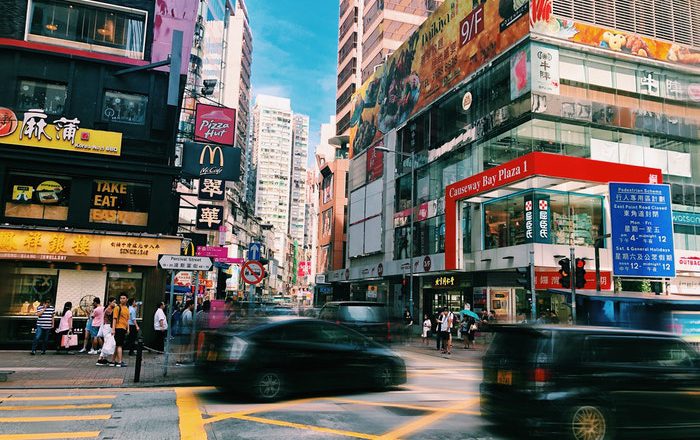
The COVID-19 pandemic has radically affected the American economy, reducing spending by American households on materials goods, air travel, leisure activities as well as the use of automobiles. As a result, greenhouse gas emissions have temporarily fallen dramatically. While this may be a positive for the environment, the social price is high: Since the U.S. economy depends heavily on consumer spending, the country is experiencing the highest unemployment rate since the Great Depression, the threat of homelessness for tens of thousands of people and a failure of businesses large and small. How did the U.S. arrive at the point whereby mass consumption – and the greenhouse gas emissions associated with it – is necessary for economic and social well-being? Are greenhouse gas reductions and a...
What is intolerance fatigue, and how is it fueling Black Lives Matter protests?
VIDEO REELS

What is intolerance fatigue, and how is it fueling Black Lives Matter protests?

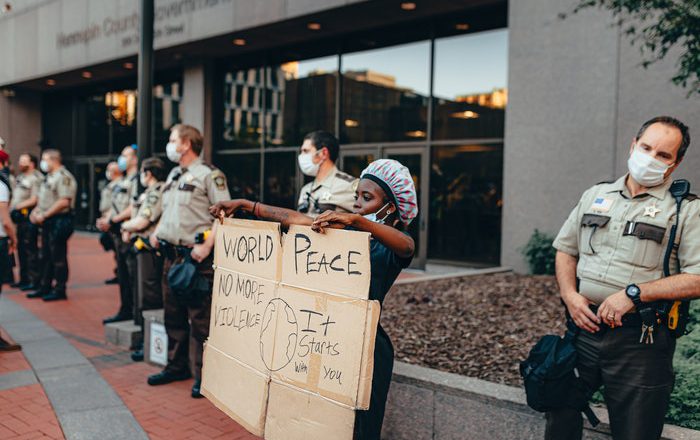
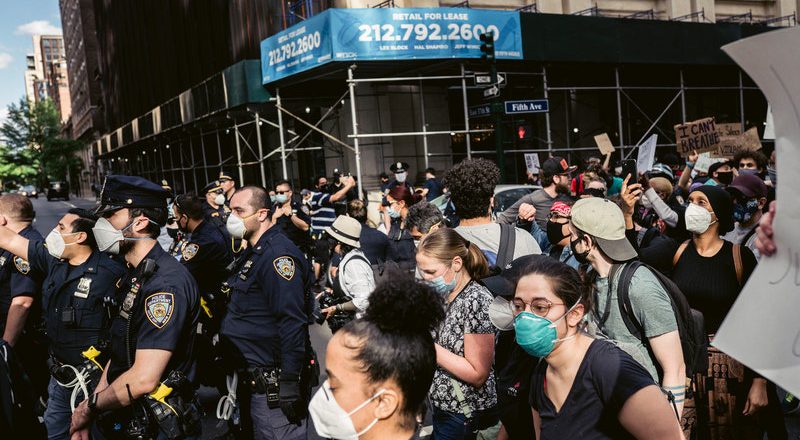
Protesters remain on the streets demanding equality and justice for Black Americans. What they’re feeling, I believe, is something I call “intolerance fatigue.” As a race scholar, examining the history of social justice movements, the phrase is new, but the concept isn’t. In 1962, during the civil rights movement, activist Fannie Lou Hamer sought to register to vote in her home state of Mississippi. When she was allowed to address the Democratic National Convention in 1964, Hamer told how she and her fellow activists were shot at, fined, arrested and brutally beaten in jail simply for trying “to register to become first-class citizens.” Fannie Lou Hamer’s powerful testimony at the 1964 Democratic National Convention. She spoke for millions in another speech that year, in which she declar...
How the images of John Lewis being beaten during ‘Bloody Sunday’ went viral
VIDEO REELS

How the images of John Lewis being beaten during ‘Bloody Sunday’ went viral

On March 7, 1965, Alabama state troopers beat and gassed John Lewis and hundreds of marchers on the Edmund Pettus Bridge in Selma, Alabama. TV reporters and photographers were there, cameras ready, and the violence captured during “Bloody Sunday” would go on to define the legacy of Lewis, who died on July 17. I’m a media historian who has written about television and the civil rights movement. One of the remarkable features of the era’s media environment, dominated by the relatively new medium of television news, is how quickly certain events could roil the conscience of the nation. Confrontations between police and protesters happened frequently during the 1960s. But a particular set of circumstances ensured that the images coming out of Selma galvanized politicians and citizens with r...
Biases in algorithms hurt those looking for information on health
VIDEO REELS

Biases in algorithms hurt those looking for information on health

YouTube hosts millions of videos related to health care. The Health Information National Trends Survey reports that 75% of Americans go to the internet first when looking for information about health or medical topics. YouTube is one of the most popular online platforms, with billions of views every day, and has emerged as a significant source of health information. Several public health agencies, such as state health departments, have invested resources in YouTube as a channel for health communication. Patients with chronic health conditions especially rely on social media, including YouTube videos, to learn more about how to manage their conditions. But video recommendations on such sites could exacerbate preexisting disparities in health. A significant fraction of the U.S. populatio...
Fast food is comforting, but in low-income areas it crowds out fresher options
VIDEO REELS

Fast food is comforting, but in low-income areas it crowds out fresher options

Many Americans take comfort in the routine of jumping into the car and grabbing a burger. They choose restaurants with familiar faces behind the counter. They even yearn for a favorite “greasy spoon” diner while having to cook for themselves at home during COVID-19. People feel emotionally attached to food and the routines associated with it. These rituals provide a sense of comfort and belonging – even if the meal is from a fast-food restaurant and they stood in line for it. I study food security in California’s Central Valley, which is, ironically, one of the most productive agricultural areas in the world. Food security means maintaining reliable, consistent access to food. It requires time and resources that are often scarce in food-insecure households. Many people in the food-rich ...
Police violence in the United States: what lies behind the ‘bad apples’ narrative
VIDEO REELS

Police violence in the United States: what lies behind the ‘bad apples’ narrative

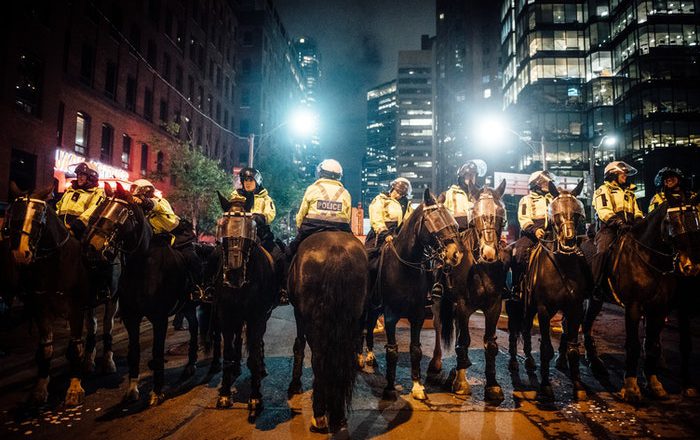
The May 25 video of George Floyd’s death sparked outrage and demonstrations across the United States as well as around the world. The direct responsibility of police officer Derek Chauvin is reflected in the charges – on June 3 were upgraded to second-degree murder, while three other officers were charged with aiding and abetting Floyd’s death. However, the interpretations of what lies behind Chauvin’s behavior and the underlying racism differ greatly, and frequently along political lines. Structural vs individual racism A frequent interpretation is that George Floyd’s death was an isolated incident by a “bad cop”. This is the prevalent view in the Trump administration and more generally among conservatives. It was clearly expressed by Robert O'Brien, the president’s National Security Advi...
Police officers accused of brutal violence often have a history of complaints by citizens
VIDEO REELS

Police officers accused of brutal violence often have a history of complaints by citizens

As protests against police violence and racism continue in cities throughout the U.S., the public is learning that several of the officers involved in the killing of George Floyd in Minneapolis and Breonna Taylor in Louisville share a history of complaints by citizens of brutality or misconduct. Decades of research on police shootings and brutality reveal that officers with a history of shooting civilians, for example, are much more likely to do so in the future compared to other officers. A similar pattern holds for misconduct complaints. Officers who are the subject of previous civilian complaints – regardless of whether those complaints are for excessive force, verbal abuse or unlawful searches – pose a higher risk of engaging in serious misconduct in the future. A study published in...
The killing of Ahmaud Arbery highlights the danger of jogging while black
VIDEO REELS

The killing of Ahmaud Arbery highlights the danger of jogging while black

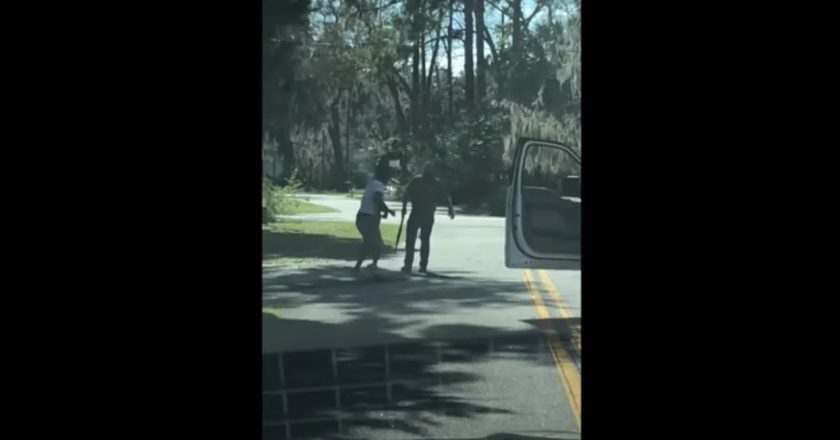
Unsteady cellphone footage follows a jogger – an apparently young, black man – as he approaches and attempts to run around a white pickup truck parked in the middle of a suburban road. Moments later he lies dead on the ground. Footage captured the last moments of Ahmaud Arbery’s life. Atlanta Journal-Constitution/Youtube The killing of Ahmaud Arbery took place on Feb. 23, after the 25-year-old was confronted by Gregory McMichael, a 64-year-old former police officer and investigator for the Brunswick, Georgia district attorney’s office, and his 34-year-old son, Travis. It took 10 weeks to gain widespread attention with the circulation of video footage on social media, prompting revulsion and calls for justice. Gregory and Travis McMichael were both taken into custody on May 7 on charges o...
10 ways to spot online misinformation
VIDEO REELS

10 ways to spot online misinformation

Propagandists are already working to sow disinformation and social discord in the run-up to the November elections. Many of their efforts have focused on social media, where people’s limited attention spans push them to share items before even reading them – in part because people react emotionally, not logically, to information they come across. That’s especially true when the topic confirms what a person already believes. It’s tempting to blame bots and trolls for these problems. But really it’s our own fault for sharing so widely. Research has confirmed that lies spread faster than truth – mainly because lies are not bound to the same rules as truth. As a psychological scientist who studies propaganda, here is what I tell my friends, students and colleagues about what to watch out fo...
5 ways life would be better if it were always daylight saving time
SLEEP, VIDEO REELS

5 ways life would be better if it were always daylight saving time

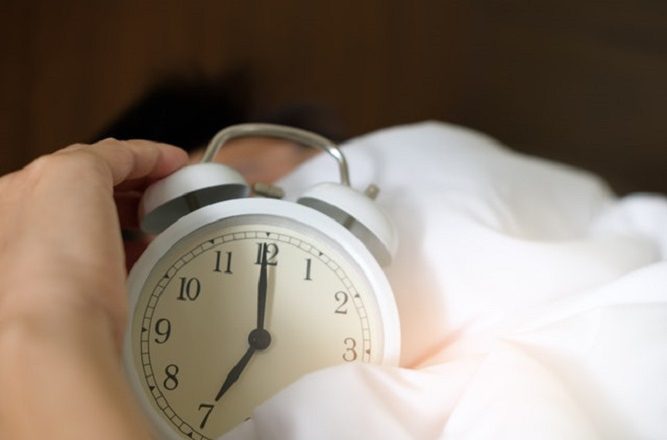
In my research on daylight saving time, I have found that Americans don’t like it when Congress messes with their clocks. In an effort to avoid the biannual clock switch in spring and fall, some well-intended critics of DST have made the mistake of suggesting that the abolition of DST – and a return to permanent standard time – would benefit society. In other words, the U.S. would never “spring forward” or “fall back.” They are wrong. DST saves lives and energy and prevents crime. Not surprisingly, then, politicians in Washington and Florida have now passed laws aimed at moving their states to DST year-round. Congress should seize on this momentum to move the entire country to year-round DST. In other words, turn all clocks forward permanently. If it did so, I see five ways that America...