Friday, July 3

VIDEO REELS

Researchers Are Preparing For The Coming Wave Of Deepfake Propaganda In A Battle Of AI Versus AI
VIDEO REELS

Researchers Are Preparing For The Coming Wave Of Deepfake Propaganda In A Battle Of AI Versus AI

An investigative journalist receives a video from an anonymous whistleblower. It shows a candidate for president admitting to illegal activity. But is this video real? If so, it would be huge news – the scoop of a lifetime – and could completely turn around the upcoming elections. But the journalist runs the video through a specialized tool, which tells her that the video isn’t what it seems. In fact, it’s a “deepfake,” a video made using artificial intelligence with deep learning. Journalists all over the world could soon be using a tool like this. In a few years, a tool like this could even be used by everyone to root out fake content in their social media feeds. As researchers who have been studying deepfake detection and developing a tool for journalists, we see a future for these to...
Homes in Black and Latino neighborhoods still undervalued 50 years after US banned using race in real estate appraisals
VIDEO REELS

Homes in Black and Latino neighborhoods still undervalued 50 years after US banned using race in real estate appraisals

Racial inequality in home values is greater today than it was 40 years ago, with homes in white neighborhoods appreciating $200,000 more since 1980 than comparable homes in similar communities of color. Our new research on home appraisals shows neighborhood racial composition still drives unequal home values, despite laws that forbid real estate professionals from explicitly using race when evaluating a property’s worth. Published in the journal Social Problems, our study finds this growing inequality results from both historical policies and contemporary practices. In the 1930s, the federal government institutionalized a process for evaluating how much a property was worth. Often called redlining, this process used neighborhood racial and socioeconomic composition to determine home valu...
Ultraviolet light can make indoor spaces safer during the pandemic – if it’s used the right way
VIDEO REELS

Ultraviolet light can make indoor spaces safer during the pandemic – if it’s used the right way

Ultraviolet light has a long history as a disinfectant and the SARS-CoV-2 virus, which causes COVID-19, is readily rendered harmless by UV light. The question is how best to harness UV light to fight the spread of the virus and protect human health as people work, study, and shop indoors. The virus spreads in several ways. The main route of transmission is through person-to-person contact via aerosols and droplets emitted when an infected person breathes, talks, sings or coughs. The virus can also be transmitted when people touch their faces shortly after touching surfaces that have been contaminated by infected individuals. This is of particular concern in health-care settings, retail spaces where people frequently touch counters and merchandise, and in buses, trains and planes. As an e...
Protecting half of the planet is the best way to fight climate change and biodiversity loss – we’ve mapped the key places to do it
VIDEO REELS

Protecting half of the planet is the best way to fight climate change and biodiversity loss – we’ve mapped the key places to do it

Humans are dismantling and disrupting natural ecosystems around the globe and changing Earth’s climate. Over the past 50 years, actions like farming, logging, hunting, development and global commerce have caused record losses of species on land and at sea. Animals, birds and reptiles are disappearing tens to hundreds of times faster than the natural rate of extinction over the past 10 million years. Now the world is also contending with a global pandemic. In geographically remote regions such as the Brazilian Amazon, COVID-19 is devastating Indigenous populations, with tragic consequences for both Indigenous peoples and the lands they steward. My research focuses on ecosystems and climate change from regional to global scales. In 2019, I worked with conservation biologist and strategist ...
Monuments ‘expire’ – but offensive monuments can become powerful history lessons
VIDEO REELS

Monuments ‘expire’ – but offensive monuments can become powerful history lessons

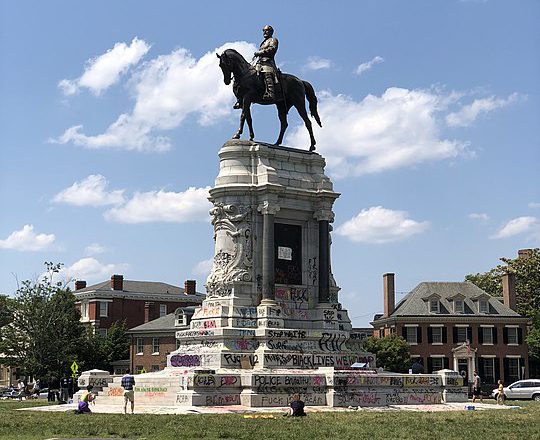
Historical monuments are intended to be timeless, but almost all have an expiration date. As society’s values shift, the legitimacy of monuments can and often does erode. This is because monuments – whether statues, memorials or obelisks – reveal the values of the time in which they were created and advance the agendas of their creators. Many 9/11 monuments in the U.S., for example, serve both to remember and honor victims of the attacks while promoting national vigilance. These views garnered nearly universal support immediately after the attacks. Over time, however, as the costs and consequences of “homeland security” became clearer, unqualified support for this agenda has waned. Current debates around racism confirm that Confederate statues and Christopher Columbus statues, both of w...
Towards Wakanda – Chadwick Boseman’s passing and the power and limits of Afrofuturism
MOVIES, VIDEO REELS

Towards Wakanda – Chadwick Boseman’s passing and the power and limits of Afrofuturism

If you’re not a comics fan, you may have been surprised at the extent of the heartfelt grief expressed following the death of actor Chadwick Boseman. One explanation lies in the extraordinary power of the 2018 movie Black Panther, in which Boseman starred as T’Challa/Black Panther, to address racist stereotypes about Africa and Africans. Boseman’s character was heir to the hidden kingdom of Wakanda, a mythical African nation free of European colonisation. The film’s subtext explores African Americans’ varying identifications, past and present, with Africa and a global Black diaspora. Dark continent Westerners’ ideas about Africa are steeped in myth. The United States, wrote German philosopher Georg Hegel in 1830, was “the land of the future”. Africa, by contrast, was “the land of chi...
A rush is on to mine the deep seabed, with effects on ocean life that aren’t well understood
VIDEO REELS

A rush is on to mine the deep seabed, with effects on ocean life that aren’t well understood

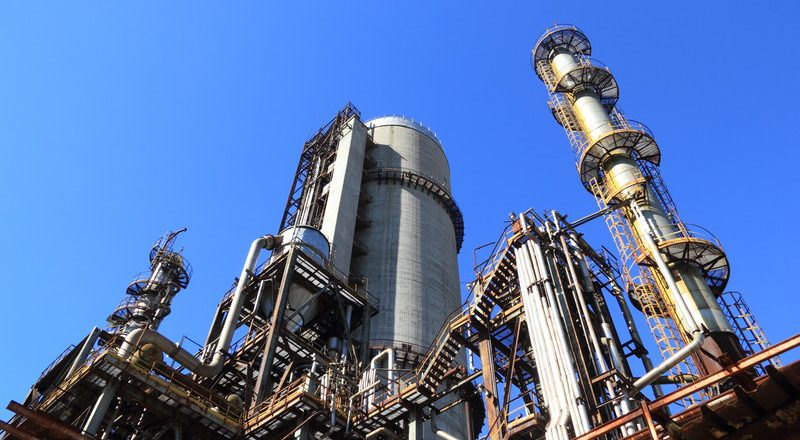
Mining the ocean floor for submerged minerals is a little-known, experimental industry. But soon it will take place on the deep seabed, which belongs to everyone, according to international law. Seabed mining for valuable materials like copper, zinc and lithium already takes place within countries’ marine territories. As soon as 2025, larger projects could start in international waters – areas more than 200 nautical miles from shore, beyond national jurisdictions. We study ocean policy, marine resource management, international ocean governance and environmental regimes, and are researching political processes that govern deep seabed mining. Our main interests are the environmental impacts of seabed mining, ways of sharing marine resources equitably and the use of tools like marine prote...
The US economy is reliant on consumer spending – can it survive a pandemic?
VIDEO REELS

The US economy is reliant on consumer spending – can it survive a pandemic?

The COVID-19 pandemic has radically affected the American economy, reducing spending by American households on materials goods, air travel, leisure activities as well as the use of automobiles. As a result, greenhouse gas emissions have temporarily fallen dramatically. While this may be a positive for the environment, the social price is high: Since the U.S. economy depends heavily on consumer spending, the country is experiencing the highest unemployment rate since the Great Depression, the threat of homelessness for tens of thousands of people and a failure of businesses large and small. How did the U.S. arrive at the point whereby mass consumption – and the greenhouse gas emissions associated with it – is necessary for economic and social well-being? Are greenhouse gas reductions and a...
What is intolerance fatigue, and how is it fueling Black Lives Matter protests?
VIDEO REELS

What is intolerance fatigue, and how is it fueling Black Lives Matter protests?

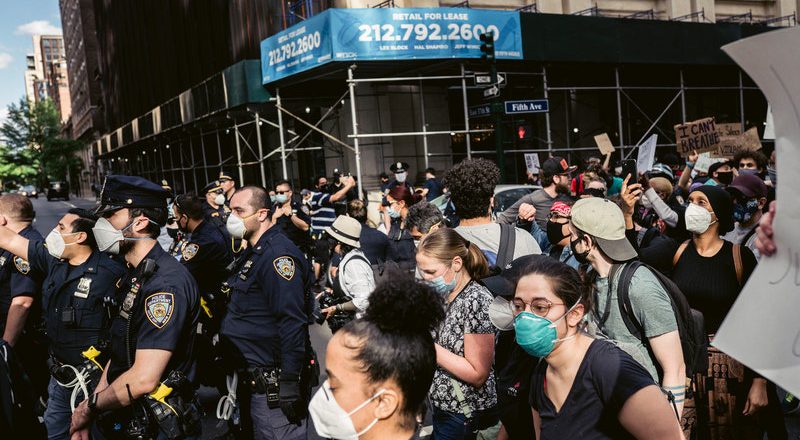
Protesters remain on the streets demanding equality and justice for Black Americans. What they’re feeling, I believe, is something I call “intolerance fatigue.” As a race scholar, examining the history of social justice movements, the phrase is new, but the concept isn’t. In 1962, during the civil rights movement, activist Fannie Lou Hamer sought to register to vote in her home state of Mississippi. When she was allowed to address the Democratic National Convention in 1964, Hamer told how she and her fellow activists were shot at, fined, arrested and brutally beaten in jail simply for trying “to register to become first-class citizens.” Fannie Lou Hamer’s powerful testimony at the 1964 Democratic National Convention. She spoke for millions in another speech that year, in which she declar...
How the images of John Lewis being beaten during ‘Bloody Sunday’ went viral
VIDEO REELS

How the images of John Lewis being beaten during ‘Bloody Sunday’ went viral

On March 7, 1965, Alabama state troopers beat and gassed John Lewis and hundreds of marchers on the Edmund Pettus Bridge in Selma, Alabama. TV reporters and photographers were there, cameras ready, and the violence captured during “Bloody Sunday” would go on to define the legacy of Lewis, who died on July 17. I’m a media historian who has written about television and the civil rights movement. One of the remarkable features of the era’s media environment, dominated by the relatively new medium of television news, is how quickly certain events could roil the conscience of the nation. Confrontations between police and protesters happened frequently during the 1960s. But a particular set of circumstances ensured that the images coming out of Selma galvanized politicians and citizens with r...