
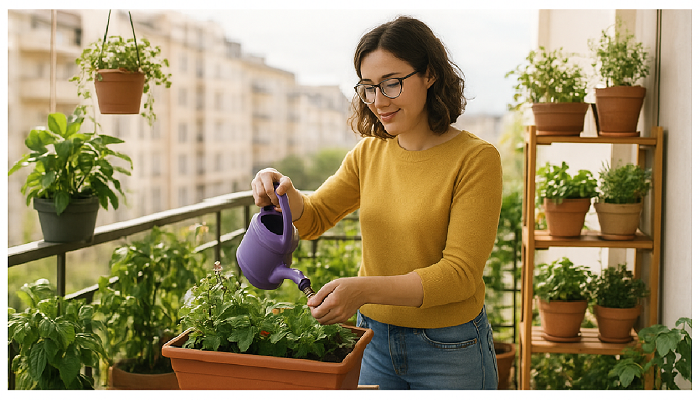
Discover the benefits of urban gardening and learn how to create your
own green oasis in the heart of the city.
In today’s fast-paced urban environments, access to green spaces can feel like a luxury. However, urban gardening is transforming balconies, rooftops, and even windowsills into vibrant mini-oases. By making the most of small areas, city dwellers are finding ways to reconnect with nature, improve their well-being, and contribute to a greener planet.
Urban gardening isn’t just about growing plants—it’s about cultivating a lifestyle. Whether it’s a balcony bursting with herbs, a vertical wall adorned with succulents, or a rooftop vegetable patch, these spaces breathe life into otherwise concrete-heavy settings. With the right techniques and planning, even a few square feet can yield flowers, fresh produce, and improved air quality.

One of the biggest appeals of urban gardening is its adaptability. Compact planters, stackable shelves, and hanging baskets make it easy to maximize vertical space. Plants like cherry tomatoes, basil, mint, and lettuce thrive in small containers, providing fresh, flavorful additions to meals. Meanwhile, low-maintenance indoor plants such as pothos, snake plants, and peace lilies can boost mood, filter indoor air, and bring calming greenery indoors.
Urban gardens also offer mental health benefits. Tending to plants provides a sense of purpose, reduces stress, and encourages mindfulness. The process of nurturing growth—watering, pruning, and harvesting—offers moments of quiet reflection in the midst of busy city life. For many, the simple act of stepping outside onto a balcony garden can feel like a refreshing escape from the urban grind.
Additionally, these small green spaces have a positive environmental impact. They reduce heat absorption in buildings, improve air quality, and support pollinators like bees and butterflies. By using sustainable practices such as composting, rainwater collection, and organic gardening methods, city gardeners can make a meaningful contribution to urban sustainability.
Getting started is easier than most think. Begin with hardy, space-efficient plants and choose containers with proper drainage. Consider sunlight availability and select plants accordingly. Gradually, as confidence grows, experiment with different varieties and arrangements. Even if you start small—a few pots of herbs on a windowsill—your urban garden can evolve into a thriving green sanctuary.
Urban gardening proves that nature doesn’t require acres of land to flourish. With creativity, care, and a little patience, even the smallest spaces can bloom into something extraordinary.
Every product is selected by editors. Things you buy through our links may earn “The IRL News” a commission.