Monday, March 9

PARENTING

What Trans Moms Worry About When Things Go Back To ‘Normal’ And Discuss Their Unique Parenting Challenges During The Pandemic
PARENTING

What Trans Moms Worry About When Things Go Back To ‘Normal’ And Discuss Their Unique Parenting Challenges During The Pandemic

Between 25% and 50% of transgender adults in the U.S. have children. Some have kids before coming out as trans, others adopt or foster, and some use egg or sperm cells they’ve frozen – usually before starting hormone replacement therapy. As a sociologist who studies inequality and reproduction, I noticed that there are few discussions of how trans people – particularly trans women – experience parenthood. So in the midst of the COVID-19 pandemic, I interviewed 50 transgender women – both current and prospective parents – from across the country and from diverse racial and class backgrounds. Some obstacles brought on by the pandemic affect transgender and cisgender – or nontrans – parents alike. For example, many struggle to balance child care and employment or have designed new parenting...
4 Essential Reads – How Do You Talk To Your Child About Violence?
PARENTING

4 Essential Reads – How Do You Talk To Your Child About Violence?

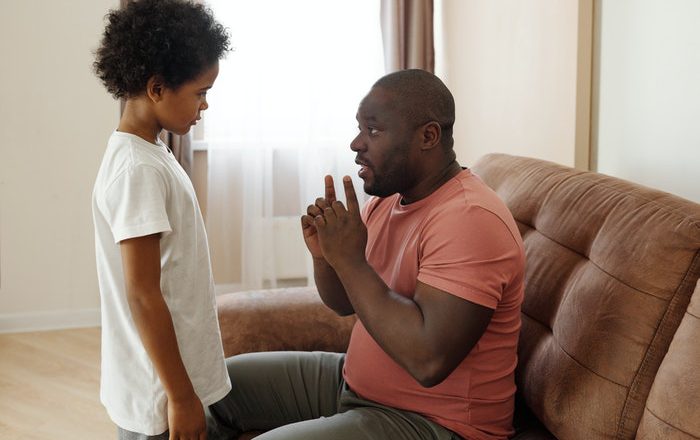
Children are exposed to images of violence almost every day, whether through the media or in real life. Consumption of violent imagery can take a harmful toll on a child’s mental and emotional well-being, research shows. Parents, especially those with young children, may be asking themselves how to talk about violence with their kids. Here are four articles from The Conversation U.S. that offer insight into how to have hard conversations with children about violence. 1. Teach children to be resilient Vanessa LoBlue, an assistant professor of psychology at Rutgers University-Newark, writes about ways parents can foster a supportive environment to help children develop resilience in stressful situations. Genuinely listening to children talk about how they feel not only shows care and acc...
Youth: A Critical Stage In Life
PARENTING

Youth: A Critical Stage In Life

I enjoy writing to young people like myself not because our old folks know better and do not need the information (which of course they do, and in fact should read it), but because a youthful psyche is one which is easily and readily flexible to both the positive influence (principles, knowledge, truths) about life or the negative appeals in our society. The youthful life is the period where characters are materialized, values are developed and choices are made. The choices and decisions that would transform our lives and even forthcoming generations, in spite of our present dilemma, will be taken during this phase of life. Steven Covey, who was an author and great teacher wrote, "I am not a product of my circumstance. I am a product of my decisions." Hence, the need for enlightenment and...
By Conquering Their Own Fears, Following Their Child’s Lead And Tolerating Ambiguity – Parents Can Support A Child Who Comes Out As Trans
PARENTING

By Conquering Their Own Fears, Following Their Child’s Lead And Tolerating Ambiguity – Parents Can Support A Child Who Comes Out As Trans

Young transgender, or trans, people face high rates of anxiety, depression and suicide. These elevated mental health risks largely stem from external factors such as discrimination, victimization and – most especially – family rejection rather than from being trans. Em Matsuno, a research fellow at Palo Alto University, is currently developing and testing an online training program called the Parent Support Program to help parents better understand and support trans youth. They talked with The Conversation U.S. about their findings and how parents can be better advocates – and avoid common missteps – when a child identifies as trans or nonbinary. What are common challenges parents with trans kids face? A big one is fear. Parents fear for their child’s safety. For example, they fear their ...
Gaming, Is It Good For Kids?
PARENTING

Gaming, Is It Good For Kids?

Gamers, have you ever noticed that you’re the first person to spot animals at the zoo? Or if someone drops candy on the ground, you know exactly where every piece landed? That may be because you play video games. Curious Kids is a series for children of all ages. If you have a question you’d like an expert to answer, send it to CuriousKidsUS@theconversation.com. My parents are always saying there’s so much bad stuff about video games, but is there any good stuff? – Ethan B., age 12, Geneva, Ohio Research has shown people who play video games like Fortnite or Rocket League have higher visual acuity, meaning they can keep track of multiple moving objects at once – or even see things in the fog or rain that others cannot. It’s one of the many benefits researchers like me have discover...
Parents Can Help Kids By Playing With Them – Gaming Has Benefits And Perils
PARENTING

Parents Can Help Kids By Playing With Them – Gaming Has Benefits And Perils

As the pandemic forced many Americans to hunker down at home, the video game industry saw record spending and profits in 2020. Interacting with other people through gaming became, for some players, essential for social connection. As an education researcher and professor of digital literacy, I study the education benefits and perils of digital gaming. These range from providing opportunities for collaborative problem-solving to displaying content that perpetuates racism and sexism. Connection and collaboration Digital games can provide a forum for a diverse group of people to come together. That’s especially important now, while our physical locations are restricted. During the COVID-19 pandemic, for example, undergraduates have shared with me the vital importance of digital games for the...
More Young Adults Are Living With Their Parents – Is That Necessarily A Bad Thing?
PARENTING

More Young Adults Are Living With Their Parents – Is That Necessarily A Bad Thing?

When the Pew Research Center recently reported that the proportion of 18-to-29-year-old Americans who live with their parents has increased during the COVID-19 pandemic, perhaps you saw some of the breathless headlines hyping how it’s higher than at any time since the Great Depression. From my perspective, the real story here is less alarming than you might think. And it’s actually quite a bit more interesting than the sound bite summary. For 30 years I’ve been studying 18-to-29-year-olds, an age group I call “emerging adults” to describe their in-between status as no longer adolescents, but not fully adult. Even 30 years ago, adulthood – typically marked by a stable job, a long-term partnership and financial independence – was coming later than it had in the past. Yes, a lot of emergi...
3 ways to promote social skills in homebound kids
PARENTING

3 ways to promote social skills in homebound kids

With the severity of the COVID-19 pandemic getting worse in most of the country, a growing number of school districts from San Francisco to Atlanta have determined that a return to daily in-person instruction isn’t yet safe or viable. They aim to to stick with remote learning as the school year gets underway. Based on my research about the psychological effects of digital technology, I’ve seen that when children and teens spend a great deal of time isolated at home and gazing at screens their social skills and self-esteem can suffer and they may become lonelier. Fortunately, there are ways to lower those risks while young people spend way more time than usual at home. 1. Practice paying attention to other people One important social skill is the ability to pay attention to another person ...
Graduation Day More Than Just A Regular Day
PARENTING

Graduation Day More Than Just A Regular Day

To some, graduation day is just a regular day, walking across a stage dressed in crazy attire only to be handed “a piece of paper” in front of a bunch of people. In my view, those rites of passages are so much more than that, especially for Black and Brown kids. We learned early and often that opportunities to be celebrated or positively acknowledged publicly are often fleeting at best for us in American society—especially when sports or entertainment are not involved. Unfortunately, because of the coronavirus pandemic sweeping the globe, May and June will be filled with prom and commencement cancellations instead of ceremonies, including my son’s kindergarten graduation. My heart aches for all class of 2020 graduates—from pre-K to graduate school and beyond, very few could honestly say t...
For parents of color, schooling at home can be an act of resistance
PARENTING

For parents of color, schooling at home can be an act of resistance

My 6-year-old hates the British. To be more specific, the British Empire that ruled over up to a quarter of the world’s land by the early 1900s. Hates that one of the biggest diamonds in the world, found in India over 1,000 years ago, now sits in the queen’s set of crown jewels. Hates that they drew up borders quickly and exited South Asia in the 1940s, resulting in the death of millions, and making his grandfather and great-grandparents refugees in the newly formed nation of India. How does my 6-year-old know all about this? Well, because we talk about it and have a lot of books at home. We have always read books about South Asian culture and history. And now that we have more flexible schedules since we have to work at home – and the kiddo has to do school at home – we have even more ti...