Tuesday, January 13

MENTAL HEALTH

A Researcher Discusses Recent Trials, Using Psychedelics To Treat PTSD, OCD, Depression And Chronic Pain And Possible Risks
MENTAL HEALTH

A Researcher Discusses Recent Trials, Using Psychedelics To Treat PTSD, OCD, Depression And Chronic Pain And Possible Risks

New research is exploring whether psychedelic drugs, taken under strict medical supervision, might help in treating post-traumatic stress disorder, chronic pain, depression and obsessive-compulsive disorder. SciLine interviewed Dr. Jennifer Mitchell – a professor in the Departments of Neurology and Psychiatry & Behavioral Science in the School of Medicine at the University of California, San Francisco – to discuss what scientists have found so far about the effectiveness of these drugs in treating these disorders and how they might safely be administered. Dr. Jennifer Mitchell discusses psychedelic medicine. The Conversation has collaborated with SciLine to bring you highlights from the discussion, which have been edited for brevity and clarity. What are psychedelic drugs and how do t...
‘Phubbing’ Your Loved Ones For Your Phone Can Do More Damage Than You Realise
MENTAL HEALTH

‘Phubbing’ Your Loved Ones For Your Phone Can Do More Damage Than You Realise

It’s pretty normal to walk through a university campus and see students sitting together, yet ignoring each other for their smartphones – but not in Spain. I’m currently visiting the University of Navarra, where each time I pass the open space outside the Institute for Culture and Society, I see the vast majority of students talking to each other without their phones in hand. As Inés Olza, a linguist from the institute, explains: In Spain people like to talk. For them, a conversation is a cooperative process; silence makes them uncomfortable. This is great news for these students, because ignoring people in favour of a phone – an act known as “phubbing”, or phone snubbing – has dire consequences. Earlier this month I published a book called The Psychology of Phubbing. In it, I build on m...
Crystals: What’s Behind The Enduring Popularity?
MENTAL HEALTH

Crystals: What’s Behind The Enduring Popularity?

As New York City mayor Eric Adams attends ribbon cuttings, marches in parades and bulldozes dirt bikes, he wears an energy stone bracelet that his supporters gave him. In a recent interview, Adams discussed his belief that New York City has a “special energy” because it sits atop a store of rare gems and stones – the so-called “Manhattan schist,” which is over 450 million years old and contains over 100 minerals. Adams isn’t the only one imbuing rocks with metaphysical significance. During the first year of the pandemic, the crystal industry boomed, with customers hoping the gems might relieve their anxiety. Some people might be confused about the allure of these stones. But crystal enthusiasts aren’t deviants. Current ideas about crystals come from a larger tradition called “metaphysica...
The History Of Emoticons
MENTAL HEALTH

The History Of Emoticons

An emoticon is most often used to express the mood of the writer through the use of letters and punctuation to form a facial expression. They serve to improve the communication of simple text by informing the receiver of the intended tone and temper of the writer. An example would be a sarcastic statement that would be lost in plain text but is saved by the use of a smiley face. The word, emoticon, is formed by blending the English words icon and emotion. After years of usage, many internet forums and messenger services as well as many games played online have replaced the typed text with a paired image. For instance, if you typed a colon for eyes and parenthesis for a mouth, this text would be replaced with the familiar yellow smiley face that is commonly known. These corresponding image...
Mildly Depressed Or Simply Stressed, People Are Tapping ‘Therapy On The Go’ Apps For Mental Health Care
MENTAL HEALTH

Mildly Depressed Or Simply Stressed, People Are Tapping ‘Therapy On The Go’ Apps For Mental Health Care

It might be surprising to think about browsing for therapists and ordering up mental health care the way you can peruse a menu on Grubhub or summon a car on Lyft. But over the last decade, digital access to therapy has become increasingly common, in some cases replacing the traditional model of in-person weekly sessions between a therapist and client. Apps for mental health and wellness range from mood trackers, meditation tools and journals to therapy apps that match users to a licensed professional. My team’s research focuses on therapy apps that work by matching clients to a licensed professional. As a social work researcher, I am interested in understanding how these apps affect clients and practitioners. My research team has studied the care that app users receive. We have talked t...
The Early Intervention For Psychosis: Not Just Popping Pills
MENTAL HEALTH

The Early Intervention For Psychosis: Not Just Popping Pills

A controversy is brewing on the website Psychology Today and subsequently in The Australian newspaper. At the heart of the issue is US psychiatrist Dr Allen Frances’ comments on the Australian Federal Government’s planned mental health reforms in early psychosis. Dr Frances has linked these reforms with another issue that is being hotly debated in the psychiatric literature: whether to create a new diagnosis of “risk syndrome for psychosis” or “attenuated psychosis syndrome” in the next edition of the Diagnostic and Statistical Manual of Mental Disorders (DSM). These two issues have become confused by Dr Frances and many other commentators. Hopefully this piece will allay some of this confusion. First, the proposed “risk syndrome” diagnosis. This diagnosis is based on work conducted in...
Can Churches Help African Americans In A Mental Health Crisis?
MENTAL HEALTH

Can Churches Help African Americans In A Mental Health Crisis?

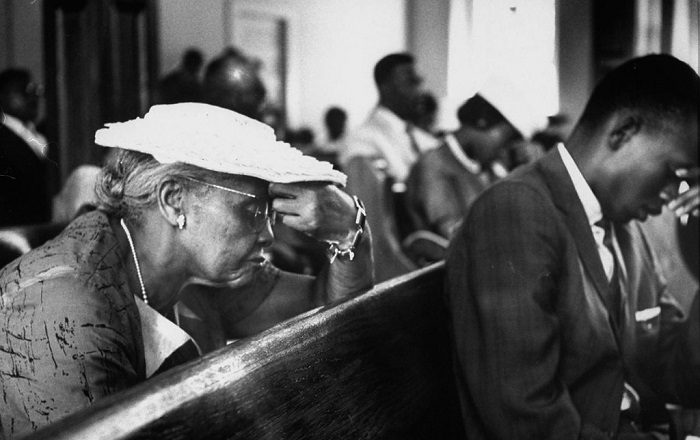
Brad R. Fulton, Indiana University Centuries of systemic racism and everyday discrimination in the U.S. have left a major mental health burden on African American communities, and the past few years have dealt especially heavy blows. Data from the Centers for Disease Control and Prevention indicate that Black Americans are twice as likely to die of COVID-19, compared with white Americans. Their communities have also been hit disproportionately by job losses, food insecurity and homelessness as a result of the pandemic. Meanwhile, racial injustice and high-profile police killings of Black men have amplified stress. During the summer of 2020, amid both the pandemic and Black Lives Matter protests, a CDC survey found that 15% of Black respondents had “seriously considered suicide in the pa...
For Treating Anxiety And Depression, As Well As Deeper Psychological Wounds, Dance And Movement Therapy Holds Promise
MENTAL HEALTH

For Treating Anxiety And Depression, As Well As Deeper Psychological Wounds, Dance And Movement Therapy Holds Promise

HEALTH Lana Ruvolo Grasser, Wayne State University A few years ago, framed by the skyline of Detroit, a group of about 15 children resettled as refugees from the Middle East and Africa leapt and twirled around, waving blue, pink and white streamers through the air. The captivating scene was powerfully symbolic. Each streamer held a negative thought, feeling or memory that the children had written down on the streamers. On cue and in unison, the children released their streamers into the air, then sat down nearby. Then they gathered up the fallen streamers, which carried their collective struggles and hardships, threw them in a trash can and waved goodbye. The children were participating in a dance therapy activity as part of our team’s research program exploring body-based approaches t...
Beware Of Claims That Ecstasy Is A Magic Bullet – MDMA May Help Treat PTSD
MENTAL HEALTH, VIDEO REELS

Beware Of Claims That Ecstasy Is A Magic Bullet – MDMA May Help Treat PTSD

Recent clinical trials, including one soon to be published in Nature Medicine, have suggested that MDMA combined with psychotherapy may help treat post-traumatic stress disorder, or PTSD. The news generated considerable optimism and excitement in the media, and some in the scientific community. As a psychiatrist and an expert in neurobiology and treatment of PTSD, I think these developments may be important – but not the major breakthrough that some people are suggesting. This approach is not a new magic bullet. A combat veteran discusses his experience with PTSD. PTSD, a disorder of emotional memories Post-traumatic stress disorder is a result of exposure to extreme traumatic experiences, such as natural disasters, motor vehicle accidents, assault, robbery, rape, combat and torture. Base...
We Found Dangerous And Stigmatizing Stereotypes Prevail While Studying Depression Messages On YouTube Videos
MENTAL HEALTH, VIDEO REELS

We Found Dangerous And Stigmatizing Stereotypes Prevail While Studying Depression Messages On YouTube Videos

Rates of depression have tripled in the U.S. since the beginning of the COVID-19 pandemic, and most recent estimates suggest these numbers remain elevated compared with pre-pandemic rates of mental health problems. Even before the pandemic, depression was a leading source of disability, affecting over 17 million Americans each year. In a society where mental health education is not uniformly taught in schools, and where most people with depression go untreated, this is a recipe for disaster. Psychologists have proposed ways to reform mental health care such as increasing access to care through telehealth. These actions are important. However, few experts have provided recommendations for how everyday citizens can flatten the depression curve by reducing stigma. To better understand why ...