Friday, April 3

AMPLIFYING DIVERSE VOICES

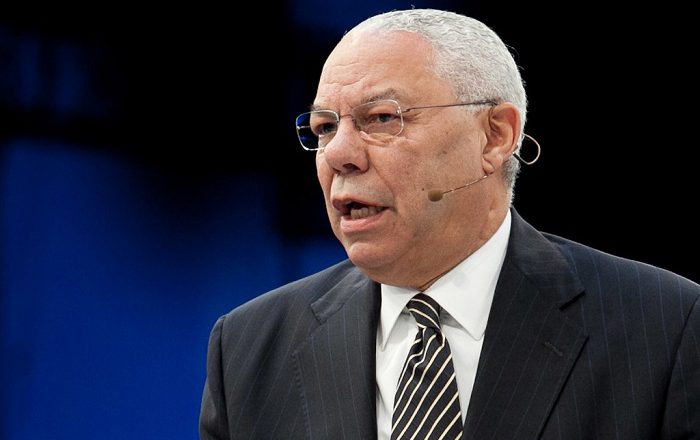
Colin Powell – As A Patriot And Black Man, He Embodied The ‘Two-Ness’ Of The African American Experience
AMPLIFYING DIVERSE VOICES

Colin Powell – As A Patriot And Black Man, He Embodied The ‘Two-Ness’ Of The African American Experience

Chad Williams, Brandeis University Colin Powell knew where he fit in American history. The former secretary of state – who died on Oct. 18, 2021, at 84 as a result of COVID-19 complications – was a pioneer: the first Black national security advisor in U.S. history, the first Black chairman of the joint chiefs of staff and also the first Black man to become secretary of state. But his “American journey” – as he described it in the title of a 2003 autobiography – is more than the story of one man. His death is a moment to think about the history of Black American men and women in the military and the place of African Americans in government. But more profoundly, it also speaks to what it means to be an American, and the tensions that Colin Powell – as a patriot and a Black man – faced th...

Howard Fuller – How The Civil Rights Activist Became A Devout Champion Of School Choice
AMPLIFYING DIVERSE VOICES

Howard Fuller – How The Civil Rights Activist Became A Devout Champion Of School Choice

Jon Hale, University of Illinois at Urbana-Champaign As a longtime civil rights activist and education reformer, Howard Fuller has seen his support for school choice spark both controversy and confusion. That’s because it aligns him with polarizing Republican figures that include Donald Trump and Trump’s former secretary of education, Betsy DeVos. But unlike those figures, Fuller’s support for school choice is not rooted in a conservative agenda to privatize public schools. Rather, it is grounded in his ongoing quest to provide Black students a quality education by any means necessary. I write about Fuller in my new book “The Choice We Face,” which traces the history of school choice as well as demands for radical education reform by Black activists. Unlike most other school choice advo...
America’s First Known Black Master Distiller – The Story Of Nearest Green
AMPLIFYING DIVERSE VOICES

America’s First Known Black Master Distiller – The Story Of Nearest Green

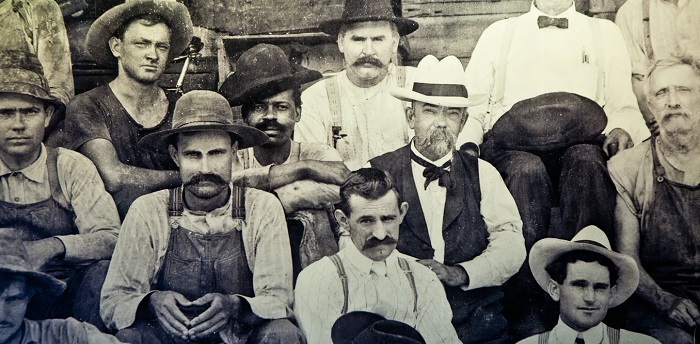
On The Record Stefanie Benjamin, University of Tennessee When you hear the name Jack Daniel, whiskey probably comes to mind. But what about the name Nathan “Uncle Nearest” Green? In 2016, The New York Times published a story about the distiller’s “hidden ingredient” – “help from a slave.” In the article, the brand officially acknowledged that an enslaved man, Nearest Green, taught Jack Daniel how to make whiskey. Since then, scholars, researchers and journalists have descended upon Lynchburg, Tennessee, hoping to learn more about a man who, until then, had appeared as a mere appendage in the story of the country’s most popular whiskey brand. As a scholar of tourism whose research involves highlighting marginalized populations and counternarratives, I followed these developments with k...
In Atlanta The Ebenezer Baptist Church Has Been A Seat Of Black Power For Generations
AMPLIFYING DIVERSE VOICES

In Atlanta The Ebenezer Baptist Church Has Been A Seat Of Black Power For Generations

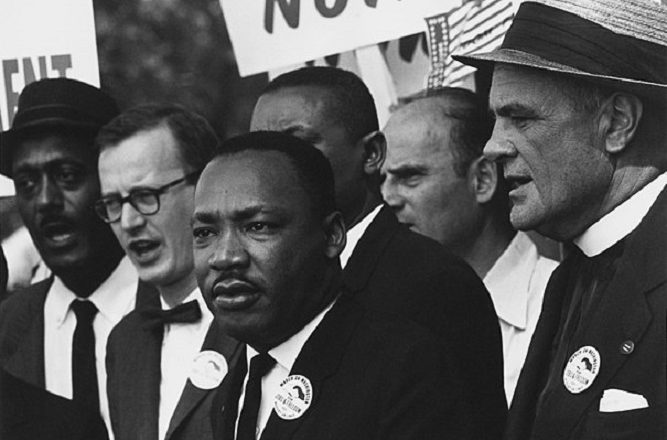
The high-stakes U.S. Senate race in Georgia catapulted the historic Ebenezer Baptist Church back into the spotlight. For 135 years, the church played a vital role in the fight against racism and the civil rights movement. It was the spiritual home of the civil rights leader, the Rev. Martin Luther King Jr. It is now the home of the state’s first Black senator – the Rev. Raphael Warnock, the senior pastor at the church. As a scholar of African American religion and Christian theology, I believe it is important to understand how the Ebenezer Baptist Church has been a seat of Black power and organizing for generations in Atlanta. ‘Stone of help’ Ebenezer Baptist Church, a predominantly African American congregation, was founded in 1886, nearly 20 years after the end of the Civil War. The pa...
Far from being anti-religious, faith and spirituality run deep in Black Lives Matter
AMPLIFYING DIVERSE VOICES

Far from being anti-religious, faith and spirituality run deep in Black Lives Matter

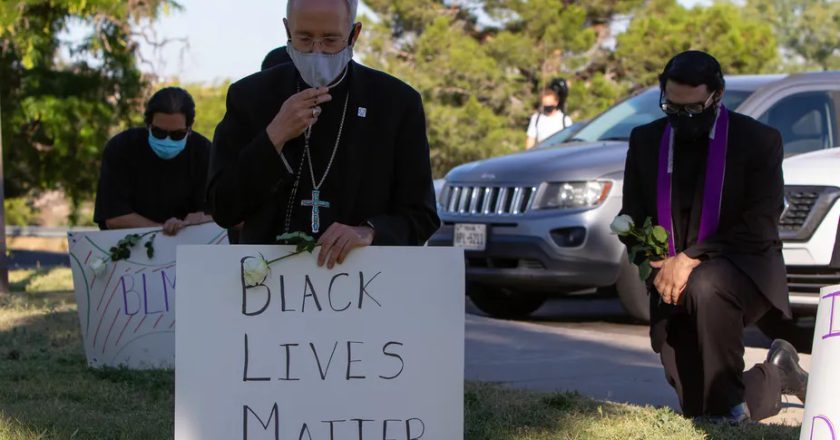
Black Lives Matters (BLM) has been portrayed by its detractors as many things: Marxist, radical, anti-American. Added to this growing list of charges is that it is either irreligious or doing religion wrong. In late July, for instance, conservative commentator Andrew Sullivan tweeted that BLM was “incompatible” with Christianity. He isn’t alone in that belief. Despite receiving the backing of diverse faith leaders and groups, BLM has been attacked by sections of the religious right. One evangelical institution felt compelled to issue a statement warning Christians about the movement’s “Godless agenda.” Other evangelicals have gone further, accusing BLM founders of being “witches” and “operating in the demonic realm.” Joining conservative Christians are some self-proclaimed liberals and ...
African Americans have long defied white supremacy and celebrated Black culture in public spaces
AMPLIFYING DIVERSE VOICES

African Americans have long defied white supremacy and celebrated Black culture in public spaces

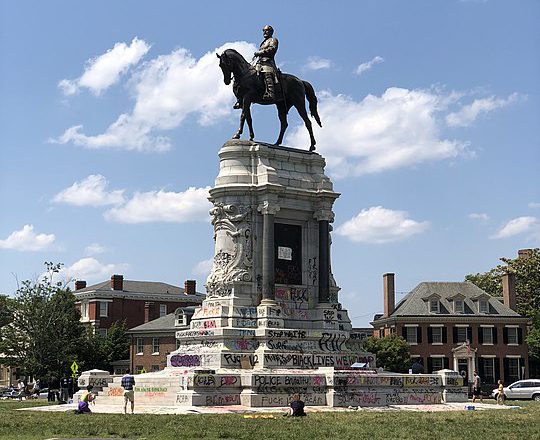
From Richmond to New York City to Seattle, anti-racist activists are getting results as Confederate monuments are coming down by the dozens. In Richmond, Virginia, protesters have changed the story of Lee Circle, home to a 130-year-old monument to Confederate General Robert E. Lee. It’s now a new community space where graffiti, music and projected images turn the statue of Lee from a monument to white supremacy into a backdrop proclaiming that Black Lives Matter. This isn’t a new phenomenon. I’m a historian of celebrations and protests after the Civil War. And in my research, I have found that long before Confederate monuments occupied city squares, African Americans used those same public spaces to celebrate their history. But those African American memorial cultures have often been o...
Mary McLeod Bethune The Most Famous Black Woman In The World
AMPLIFYING DIVERSE VOICES

Mary McLeod Bethune The Most Famous Black Woman In The World

Mary McLeod Bethune founded a college, defied the Klan, advised presidents, and like my grandmother, was a fierce warrior for justice. Born in 1914, Dovey Johnson Roundtree was subject to the double barriers of institutionalized racism and sexism, but rose from poverty to become a distinguished champion of civil and women’s rights. As a member of the Women’s Army Auxiliary Corps during WWII, she helped desegregate the US military. She went on to become a crusading lawyer, winning a landmark bus desegregation case in 1955. As a minster in the 1960s, she was in the vanguard of women ordained as leaders in the AME church. In her memoir, Mighty Justice: My Life in Civil Rights, Roundtree describes how the support of community, mentors, and family nurtured her career. In this excerpt, Roundtre...
AMPLIFYING DIVERSE VOICES

Connecting The Dots Between Slavery And Prison

Students suing the Ivy League say rather than helping to dismantle the system of “human caging,” the school is profiting from it. “Today we take an important step in the effort to explore the complexities of our past and to restore this painful dimension of Harvard’s history to the understanding of our heritage. The past never dies or disappears. It continues to shape us in ways we should not try to erase or ignore.” Harvard University President Drew Faust spoke these words in 2016 as she stood alongside U.S. Rep. John Lewis of Georgia in front of the university’s famed Wadsworth House. They unveiled a plaque in remembrance of enslaved people who served the university centuries ago. In 2019, current President Lawrence Bacow renewed the pledge. But it would appear Harvard, which had a p...
How Civil Rights Leader Wyatt Tee Walker Revived Hope After MLK’s Death
AMPLIFYING DIVERSE VOICES

How Civil Rights Leader Wyatt Tee Walker Revived Hope After MLK’s Death

Four years after the assassination of Martin Luther King, Jr., the novelist James Baldwin would write on the pages of Esquire magazine, “Since Martin’s death, in Memphis, and that tremendous day in Atlanta, something has altered in me, something has gone away.” Baldwin wrote about how “the act of faith” – that is, his belief that the movement would change white Americans and ultimately America – maintained him through the years of the black freedom movement, through marches and petitions and torturous setbacks. After King’s death, Baldwin found it hard to keep that faith. Nearly two weeks after King’s funeral, in April of 1968, King’s confidant and former strategist Wyatt Tee Walker tried to renew this faith. Drawing on a tradition of black faith, Walker encouraged a grieving communit...
How a heritage of black preaching shaped MLK’s voice in calling for justice
AMPLIFYING DIVERSE VOICES

How a heritage of black preaching shaped MLK’s voice in calling for justice

The name Martin Luther King Jr. is iconic in the United States. President Barack Obama mentioned King in both his Democratic National Convention nomination acceptance and victory speeches in 2008, when he said, “[King] brought Americans from every corner of this land to stand together on a Mall in Washington, before Lincoln’s Memorial…to speak of his dream.” Indeed, much of King’s legacy lives on in such arresting oral performances. They made him a global figure. The name Martin Luther King Jr. is iconic in the United States. President Barack Obama mentioned King in both his Democratic National Convention nomination acceptance and victory speeches in 2008, when he said, “[King] brought Americans from every corner of this land to stand together on a Mall in Washington, before Lincoln’s M...