Monday, January 12

AMPLIFYING DIVERSE VOICES

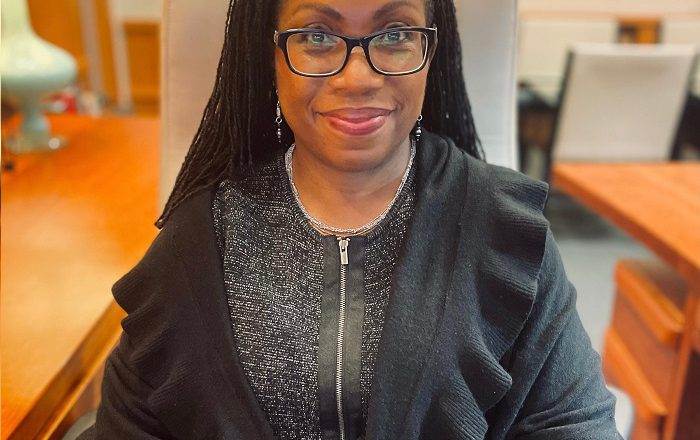
Judge Ketanji Brown Jackson Goes Down In History As The First Black Woman Nominated To The Supreme Court
AMPLIFYING DIVERSE VOICES

Judge Ketanji Brown Jackson Goes Down In History As The First Black Woman Nominated To The Supreme Court

President Joe Biden nominated Judge Ketanji Brown Jackson to the Supreme Court, a historic choice that could fundamentally change who helps to protect and interpret the Constitution and ensure equal justice under the law. If confirmed, Jackson will be the first Black woman — and the first former federal public defender — on the nation’s highest court in its 232-year history. While she would not shift the Supreme Court’s ideological makeup, she brings a distinct life experience and professional background to the court that serves as the final arbiter of law. Of the 120 justices who have served in its history, 115 have been men, and 117 have been White. Now, with Justice Stephen Breyer set to retire at the end of the court’s term in early summer, Jackson will have the opportunity to make h...
Alice Walker Breaks Out As One Of The Leading Female Voices In African American Literature
AMPLIFYING DIVERSE VOICES

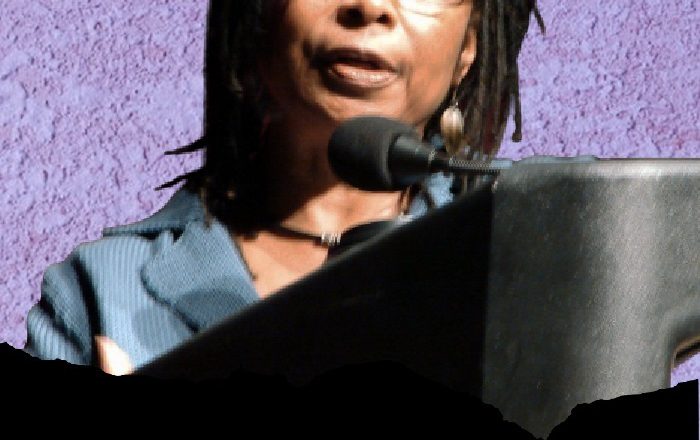
Alice Walker Breaks Out As One Of The Leading Female Voices In African American Literature

An African American writer and activist Alice Walker began publishing her fiction and poetry during the latter years of the Black Arts movement in the 1960's. Born in 1944 in Eatonton, Georgia, to sharecropper parents,  she knew racism and poverty only too well and with works expressing the need for the tackling of such issues she has become one of the best-known and most highly respected writers from the U.S. along with such writers as Toni Morrison and Gloria Naylor , commonly associated with the post-1970s surge in African American women's literature. Her activism started after being educated at Spelman College and Sarah Lawrence College, where Walker, in a commencement speech spoke out against the silence of that institution's curriculum to African-American culture and history. Active...
Black History Month: Past Movements For Civil Rights – What America’s Voting Rights Activists Can Learn
AMPLIFYING DIVERSE VOICES

Black History Month: Past Movements For Civil Rights – What America’s Voting Rights Activists Can Learn

With Congress failing to pass new voting rights legislation, it’s worth remembering that throughout U.S. history, new civil rights laws designed to end racial inequities across American life have been met by stubborn resistance. Senate Democrats Joe Manchin of West Virginia and Kyrsten Sinema of Arizona joined Senate Republicans in blocking both the Freedom to Vote Act and the John Lewis Voting Rights Advancement Act. These bills would have combated voter suppression by creating a national automatic voter registration system, and they also would have banned partisan gerrymandering. In the wake of the vote, President Joe Biden said he was “profoundly disappointed that the United States Senate has failed to stand up for democracy.” These setbacks in Congress come on the heels of millions ...
A Visual Timeline Of Black Life In America From The Mighty To The Mundane
AMPLIFYING DIVERSE VOICES

A Visual Timeline Of Black Life In America From The Mighty To The Mundane

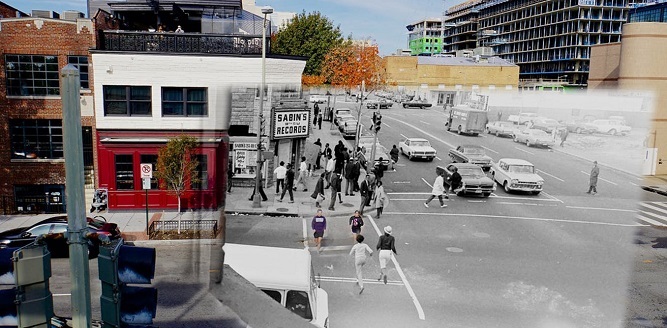
For nearly a century, Black History Month has been a time to celebrate the achievements of groundbreaking people who have shaped our country’s history. Much of this focus is on trailblazers like Kamala Harris, civil rights pioneers, advocates, politicians, policymakers and entertainers from Beyoncé to Cardi B. But as those leaders spoke to crowds and infiltrated halls of power, millions of Black people lived their lives and made their own history. Often those contributions were more humble. Even simply celebrating the things and people closest to them in ways that might not have been accessible to previous generations — from birthday and retirement parties to navigating grief or simply having a picnic at a park — served as markers of progress. This Black History Month, in addition to hig...
As A Lawyer And Parent – How Ketanji Brown Jackson’s Pursuit Of Success Got Her A Potential Supreme Court Nod
AMPLIFYING DIVERSE VOICES

As A Lawyer And Parent – How Ketanji Brown Jackson’s Pursuit Of Success Got Her A Potential Supreme Court Nod

Ketanji Brown Jackson was fresh out of a prestigious clerkship with U.S. Supreme Court Justice Stephen Breyer in 2000 when she took a job with a big law firm, Goodwin Procter, in Boston. Her first daughter, Talia, was born a few months later, and, like many new mothers, Brown found herself struggling to balance the demands of her work with the needs of her family. “The firm was very supportive, but I don’t think it is possible to overstate the degree of difficulty that many young women and especially new mothers face in the law firm context,” Jackson said in a 2017 speech as part of the University of Georgia Law School’s Edith House Lecture Series, a program named for the first woman to graduate from the school. “The hours are long. The workflow is unpredictable. You have little control ...
The Black People
AMPLIFYING DIVERSE VOICES

The Black People

Black American's are American's mostly or partly of African descent. More than 28 million blacks live in the United States. They account for 12 percent of the nation's total population and make up the largest minority group. About half of all black Americans live in the Southern States. Most of the rest live in large cities in the east, Midwest, and West. Black people belong to the African geographical race. This race consists of dark-skinned peoples who live or whose ancestors lived south of the Sahara, the vast desert that stretches across northern Africa. In addition to dark brown skin, most members of this race have brown eyes, dark wooly or curly hair, and thick lips. Most black American's have used five terms to refer themselves. The term Negro (which means black in Spanish and Port...
Growing Up Black In America
AMPLIFYING DIVERSE VOICES

Growing Up Black In America

I grew up in a home with both parents having a heritage rooted in black America. My father was born in Mississippi to parents who operated a farm their entire lives. He had 2 sisters and a brother. Once he was grown he moved to Illinois, took a job, married and raised a family. My mother was born in Louisiana to a father who was of direct African descent and a mother who was of direct native Indian. They moved to California and made a home having just one daughter and many sons. Her brothers ended up joining the military and made a career serving and protecting our country. As a child we never had a lot of money but my family still managed to purchase a home, my father always keep a nice car and he worked every day to support his family. I learned from my father the importance of a great...
African Americans Have Long Celebrated Black Culture In Public Spaces Defying White Supremacy
AMPLIFYING DIVERSE VOICES

African Americans Have Long Celebrated Black Culture In Public Spaces Defying White Supremacy

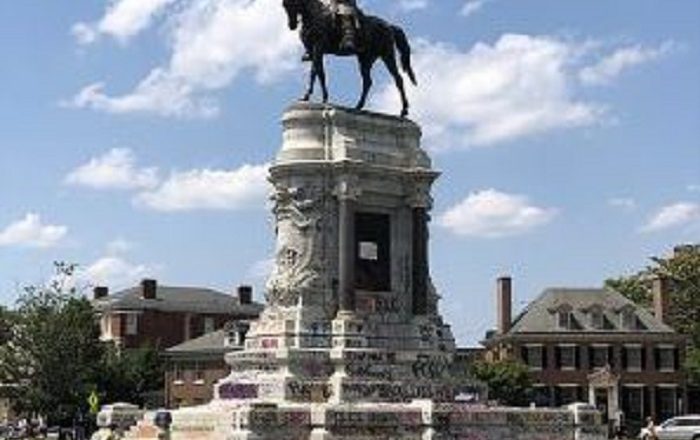
From Richmond to New York City to Seattle, anti-racist activists are getting results as Confederate monuments are coming down by the dozens. In Richmond, Virginia, protesters have changed the story of Lee Circle, home to a 130-year-old monument to Confederate General Robert E. Lee. It’s now a new community space where graffiti, music and projected images turn the statue of Lee from a monument to white supremacy into a backdrop proclaiming that Black Lives Matter. This isn’t a new phenomenon. I’m a historian of celebrations and protests after the Civil War. And in my research, I have found that long before Confederate monuments occupied city squares, African Americans used those same public spaces to celebrate their history. But those African American memorial cultures have often been o...
Black History Month: To Fully Appreciate Black History, The US Must Let Go Of Lingering Confederate Nostalgia
AMPLIFYING DIVERSE VOICES

Black History Month: To Fully Appreciate Black History, The US Must Let Go Of Lingering Confederate Nostalgia

As a nation, the U.S. is debating the meaning of Confederate symbolism and history. That debate is closely tied to how the U.S. commemorates, or fails to commemorate, the full spectrum of African-American history. In my research I explore why people choose to remember some parts of the past and not others. I have also studied how communities choose to forget portions of the past in order to overcome longstanding conflicts. Based on this work, I would argue that nostalgic versions of Confederate history inhibit our ability to memorialize African-American historical experiences and achievements as centerpieces of U.S. history. Forgetting and forging ahead A commitment to starting over and creating a new future is a deep-seated part of the U.S. experience. Thomas Paine published “Common Se...
MLK Jr. Had A More Radical Message Than A Dream Of Racial Brotherhood
AMPLIFYING DIVERSE VOICES

MLK Jr. Had A More Radical Message Than A Dream Of Racial Brotherhood

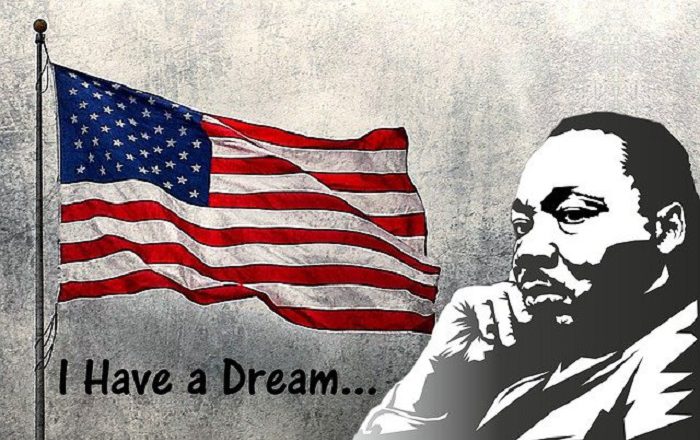
Martin Luther King Jr. has come to be revered as a hero who led a nonviolent struggle to reform and redeem the United States. His birthday is celebrated as a national holiday. Tributes are paid to him on his death anniversary each April, and his legacy is honored in multiple ways. But from my perspective as a historian of religion and civil rights, the true radicalism of his thought remains underappreciated. The “civil saint” portrayed nowadays was, by the end of his life, a social and economic radical, who argued forcefully for the necessity of economic justice in the pursuit of racial equality. Three particular works from 1957 to 1967 illustrate how King’s political thought evolved from a hopeful reformer to a radical critic. King’s support for white moderates For much of the 1950s, Ki...