Monday, January 12

AMPLIFYING DIVERSE VOICES

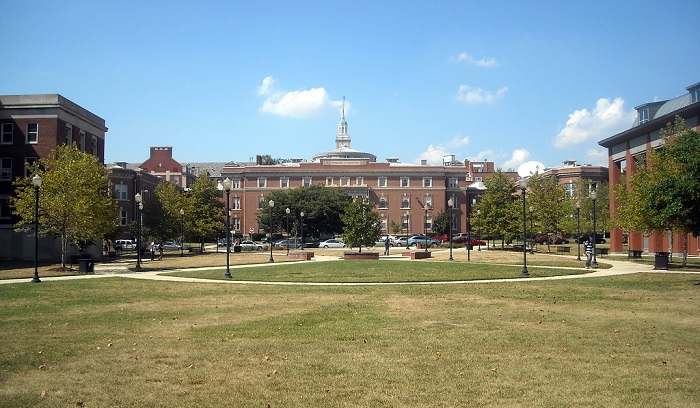
How Howard University Came To Be Known As ‘The Mecca’ — The Untold Story
AMPLIFYING DIVERSE VOICES

How Howard University Came To Be Known As ‘The Mecca’ — The Untold Story

The untold story of how Howard University came to be known as ‘The Mecca’. If you ask just about anyone at Howard University what’s the other name for their school, they will readily tell you: “The Mecca.” The name has been extolled by former students, such as acclaimed author Ta-Nehisi Coates, who wrote in his 2015 book “Between the World and Me” that his “only Mecca was, is, and shall always be Howard University.” But ask anyone in the Howard community how and when the school came to be known as The Mecca – a question I’ve been researching for the past year – and blank stares are mostly the response. In a 2019 article, The New York Times tried to find the origins of the use of the term for Howard when U.S. Sen. Kamala Harris, one of the school’s most well-known alumnae, was still a 20...
During The March On Washington In 1963 Gospel Singer Mahalia Jackson Made A Suggestion − And It Changed A Good Speech To A Majestic Sermon On An American Dream
AMPLIFYING DIVERSE VOICES

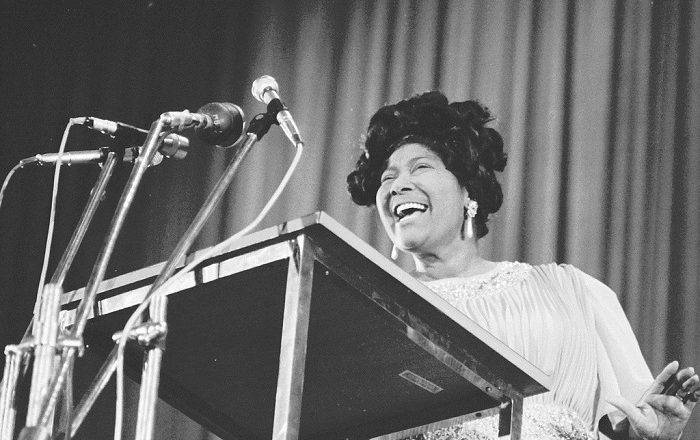
During The March On Washington In 1963 Gospel Singer Mahalia Jackson Made A Suggestion − And It Changed A Good Speech To A Majestic Sermon On An American Dream

Gospel singer Mahalia Jackson made a suggestion during the 1963 March on Washington − and it changed a good speech to a majestic sermon on an American dream. Every now and then, a voice can matter. Mahalia Jackson had one of them. Known around the world as the “Queen of Gospel,” Jackson used her powerful voice to work in the Civil Rights Movement. Starting in the 1950s, she traveled with Rev. Martin Luther King Jr. throughout the South and heard him preach in Black churches about a vision that only he could see. But on Aug. 28, 1963, on the steps of the Lincoln Memorial, something didn’t quite sound right to Jackson as she listened to King deliver his prepared speech. King was reading from his prepared remarks when she made a simple suggestion. “Tell them about the dream, Martin,” she u...
Exploreing The Legacy Of “Big Mama” Thornton The Black Musician Who Made ‘Hound Dog’ A Hit
AMPLIFYING DIVERSE VOICES

Exploreing The Legacy Of “Big Mama” Thornton The Black Musician Who Made ‘Hound Dog’ A Hit

What do you want to know about LGBTQ+ issues? We want to hear from you, our readers, about what we should be reporting and how we can serve you. Get in touch here. June is a month of joy, resistance and celebration. In addition to Pride, a celebration of queer identities that stemmed from the Stonewall uprising, June is also Black Music Month. Black musical traditions, originating in Africa and remixed in the many places Africans were distributed, have left their mark on music worldwide. From gospel to country, from jazz to the blues, from hip-hop to rock and roll, traces of Black entertainers can be found at the roots of many genres. And Black, queer musicians have been there all the way. When Willie Mae “Big Mama” Thornton recorded her bluesy hit song “Hound Dog” in 1952, she did it h...
Black Church’s Diversity, And Its Vital Role In American Politics – A Brief History
AMPLIFYING DIVERSE VOICES

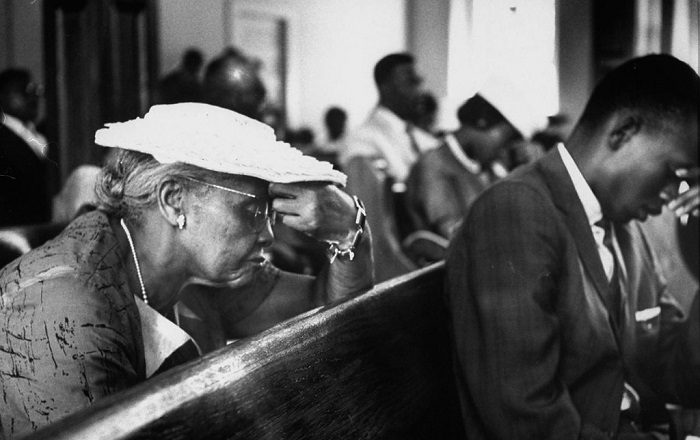
Black Church’s Diversity, And Its Vital Role In American Politics – A Brief History

With religious affiliation on the decline, continuing racism and increasing income inequality, some scholars and activists are soul-searching about the Black church’s role in today’s United States. The exterior view of the Bethel African American Methodist Episcopal Church at 125 S. 6th St. in Philadelphia. Breton, William L., circa 1773-1855 Artist via the Library of Congress, World Digital Library For instance, on April 20, 2010, an African American Studies professor at Princeton, Eddie S. Glaude, sparked an online debate by provocatively declaring that, despite the existence of many African American churches, “the Black Church, as we’ve known it or imagined it, is dead.” As he argued, the image of the Black church as a center for Black life and as a beacon of social and moral transform...
A Historian Connects Shirley Chisholm’s Life And Politics: ‘We Need To See Our Heroes As Human’
AMPLIFYING DIVERSE VOICES

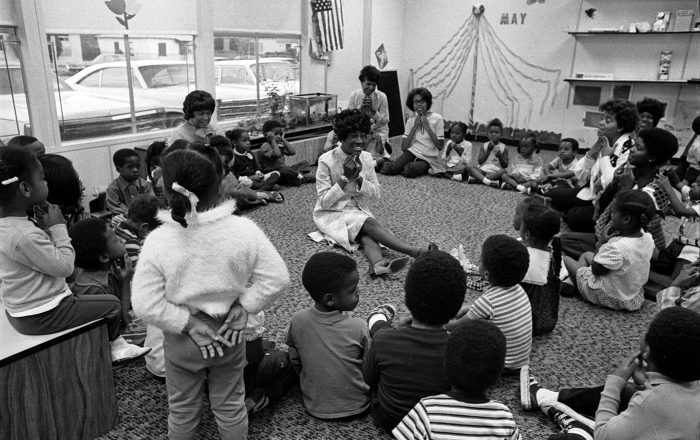
A Historian Connects Shirley Chisholm’s Life And Politics: ‘We Need To See Our Heroes As Human’

Shirley Chisholm was a trailblazer: the first Black woman elected to Congress and the first Black candidate and the first woman candidate for a major-party nomination for president of the United States. Still, despite her tremendous influence on American politics, biographies of Chisholm have been immensely hard to come across. With her recently released book, “Shirley Chisholm: Champion of Black Feminist Power Politics,” Anastasia C. Curwood, a professor and interim chair of the Department of History at the University of Kentucky, hopes to alleviate this gap. A cradle-to-grave biography as Curwood calls it, the book gives insight into who Chisholm was as a person and how Chisolm’s many lived experiences and multiple identities shaped who she was. In the book, Curwood coins the term “Blac...
Better Known For Her Slave Rescues, Harriet Tubman Led Military Raids During The Civil War As Well
AMPLIFYING DIVERSE VOICES

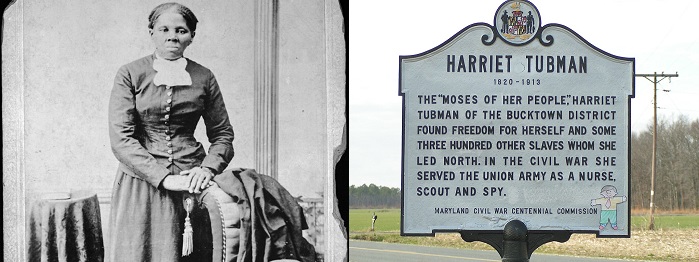
Better Known For Her Slave Rescues, Harriet Tubman Led Military Raids During The Civil War As Well

Harriet Tubman was barely 5 feet tall and didn’t have a dime to her name. What she did have was a deep faith and powerful passion for justice that was fueled by a network of Black and white abolitionists determined to end slavery in America. “I had reasoned this out in my mind,” Tubman once told an interviewer. “There was one of two things I had a right to, liberty, or death. If I could not have one, I would have the other; for no man should take me alive.” Though Tubman is most famous for her successes along the Underground Railroad, her activities as a Civil War spy are less well known. As a biographer of Tubman, I think this is a shame. Her devotion to America and its promise of freedom endured despite suffering decades of enslavement and second class citizenship. It is only in mod...
An Intimate Glimpse Into Segregation-Era Life For African Americans – The Gordon Parks Exhibit
AMPLIFYING DIVERSE VOICES

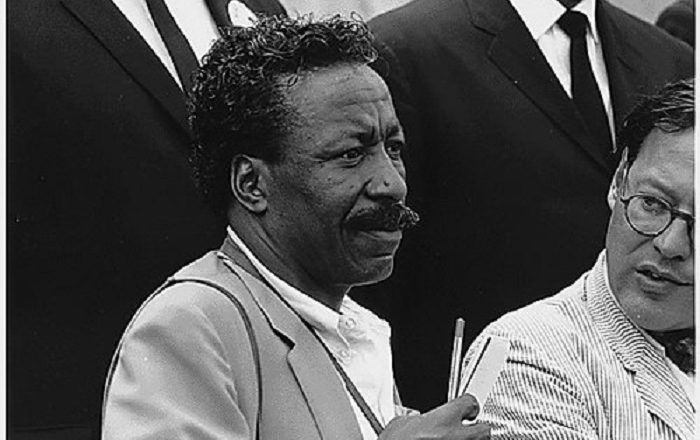
An Intimate Glimpse Into Segregation-Era Life For African Americans – The Gordon Parks Exhibit

In the spring of 1950, Gordon Parks, the first African-American photographer for Life Magazine, returned to his hometown of Fort Scott, Kansas. On assignment for the magazine, Parks photographed his middle school classmates, who were dispersed among Fort Scott and other Midwestern cities and towns. The resulting images – while quite personal to Parks – offer a glimpse into a community and a set of experiences shared by many African Americans of his generation. Depicting the realities of discrimination without the veil of nostalgia, it’s a body of work that captures the resiliency of a community at a significant point in American history – just prior to the Civil Rights Movement. But for reasons unknown, Life never published the series. Now, the powerful exhibit of over 40 segregation-er...
Don’t Listen To The Sanitized Version Of History – Jackie Robinson Was A Radical
AMPLIFYING DIVERSE VOICES

Don’t Listen To The Sanitized Version Of History – Jackie Robinson Was A Radical

In our new book, “Baseball Rebels: The Players, People, and Social Movements That Shook Up the Game and Changed America,” Rob Elias and I profile the many iconoclasts, dissenters and mavericks who defied baseball’s and society’s establishment. But none took as many risks – and had as big an impact – as Jackie Robinson. Though Robinson was a fierce competitor, an outstanding athlete and a deeply religious man, the aspect of his legacy that often gets glossed over is that he was also a radical. The sanitized version of the Jackie Robinson story goes something like this: He was a remarkable athlete who, with his unusual level of self-control, was the perfect person to break baseball’s color line. In the face of jeers and taunts, he was able to put his head down and let his play do the talki...
Ketanji Brown Jackson Confirmed As The First Black Woman To Sit On The Supreme Court
AMPLIFYING DIVERSE VOICES

Ketanji Brown Jackson Confirmed As The First Black Woman To Sit On The Supreme Court

The phrase “in a historic vote” gets thrown around a lot in journalism – and it isn’t always warranted. But shortly after 2 p.m. EDT on April 7, 2022, a Senate roll call confirmed Ketanji Brown Jackson as the next U.S. Supreme Court justice – the first Black woman to sit on the bench. The elevation of Jackson to the Supreme Court will not change the ideological setup of the bench – which would continue to be split 6-3 in favor of conservative justices. Nonetheless, it is an important landmark in the history of the court – of the 115 justices on the Supreme Court since it was established in 1789, 108 have been white men. Race featured in Jackson’s confirmation process; so too did attempts to define her “judicial philosophy.” The Conversation has turned to legal scholars to explain the me...
In 19th-century America A Black Writer Used Humor To Combat White Supremacy
AMPLIFYING DIVERSE VOICES

In 19th-century America A Black Writer Used Humor To Combat White Supremacy

Any writer has to struggle with the dilemma of staying true to their vision or giving editors and readers what they want. A number of factors might influence the latter: the market, trends and sensibilities. But in the decades after the Civil War, Black writers looking to faithfully depict the horrors of slavery had to contend with readers whose worldviews were colored by racism, as well as an entire swath of the country eager to paper over the past. Charles Chesnutt was one of those writers. Forced to work with skeptical editors and within the confines of popular forms, Chesnutt nonetheless worked to shine a light on the legacy of slavery. His 1899 collection of stories, “The Conjure Woman,” took place on a Southern plantation and sold well. At first glance, the stories seemed to mimic...